Future Therapist or Digital Illusion? Artificial Intelligence and Loneliness
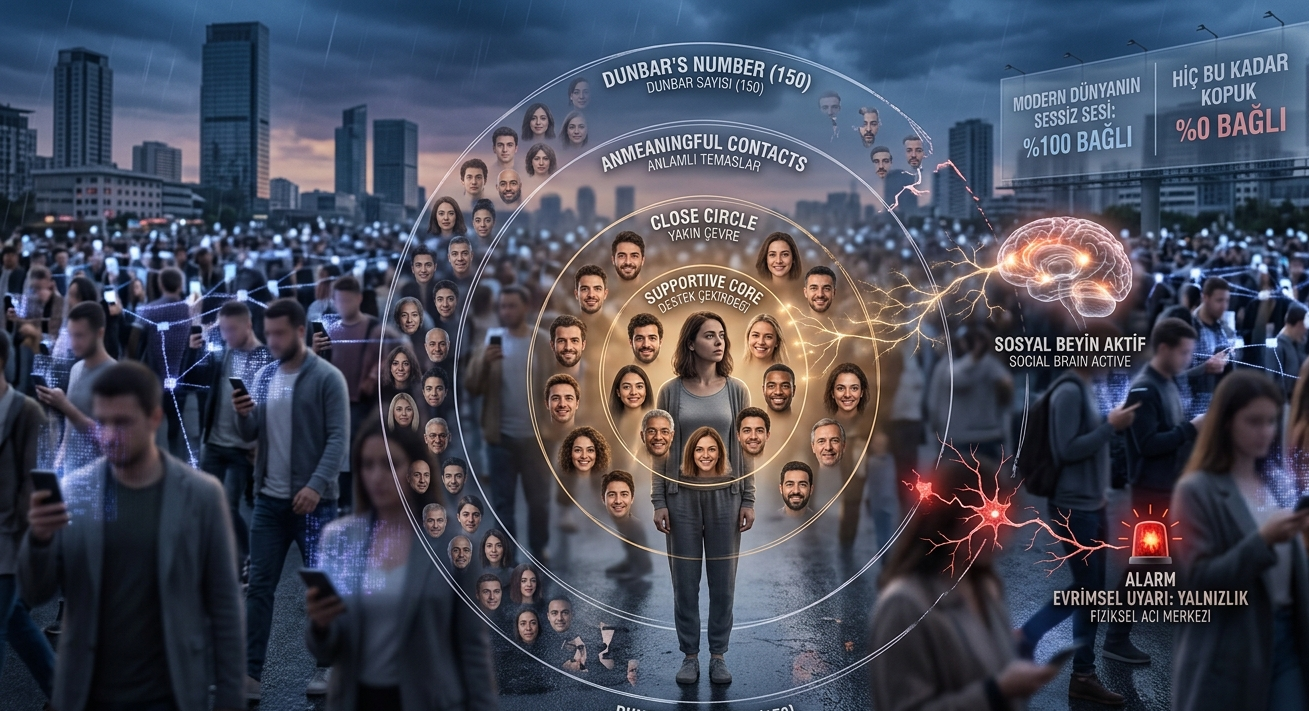
While the World Health Organization defines loneliness as a “global health threat,” the tech world has offered an ambitious solution: AI Companionship. Millions of people are now sharing their troubles, dreams, and daily routines not with humans, but with algorithms that never judge them. But does bonding with software heal us, or further detach us from reality?
Digital Loneliness: Why Do We Seek Refuge in Machines?
We live in an atomized society where traditional social ties are fraying. Human relationships are risky; they involve rejection, judgment, or disappointment. AI, however, promises:
- 24/7 Availability: It never sleeps and never says “I’m busy.”
- Zero Judgment: It listens to even your darkest secrets with empathy (or a simulation of it).
- Personalized Attention: It acts as a “mirror” optimized entirely for your interests and moods.
The “ELIZA Effect” and Anthropomorphism
In psychology, the ELIZA Effect is the tendency for humans to attribute human characteristics to computer programs. When we feel that the code in front of us “understands” us, our brain’s dopamine and oxytocin levels can react as if we were talking to a real human. While this can momentarily soothe the feeling of loneliness, it can create an emotional dependency in the long run.
Psychological Benefits: Can AI Be a “Bridge”?
Some clinical studies show that AI companionship can be helpful, particularly in certain areas:
- Social Practice: For individuals with social anxiety, AI provides a safe “training ground” before forming bonds with real people.
- Crisis Management: During panic attacks at midnight or moments of deep despair, AI can act as a form of “psychological first aid.”
The Dark Side: The Mechanization of Relationships
Like every major technological leap, AI companionship comes with potential costs:
- Atrophy of Empathy: You cannot argue with an algorithm because it is designed to please you. This can wither an individual’s conflict-resolution skills in real life.
- Artificial Satisfaction: When the elements of “unpredictability” and “sacrifice” found in human bonds are missing, the connection remains shallow.
- Data Privacy: Storing your most intimate emotions as “training data” in a company’s database carries both ethical and psychological risks.
2026 and Beyond: A New Form of Belonging
In the future, the definition of “loneliness” may change. While the human-to-human bond will remain the gold standard, human-machine interaction will become an inevitable “hybrid” part of our lives. The key is not to replace real human connections with AI, but to position it as a tool that supports them.
Conclusion: Does Software Have a Heart?
An algorithm cannot wipe away your tears, but it can listen to why you are crying. AI companionship is a technological manifestation of the modern human’s need to be “seen” and “heard.” In this new world, the key to psychological health is not losing our contact with ourselves in the mirror and real people on the street, rather than the code beyond the screen.
By: Dilara KARABACAK